
Building your wedding guest list is one of the most important steps in planning a smooth, well-organised wedding. The number of guests affects far more than the invitations: it shapes the budget, the size of the venue, the number of tables, the catering and the seating plan.
Choosing who to invite looks easy at first, but it gets harder when you try to balance relatives, friends and colleagues while keeping to a number that fits your budget and the mood you want.
In this guide we go through how to build a wedding guest list step by step, from setting the right number to sending invitations and following up on RSVPs.
Why does the guest list matter so much in wedding planning? #
A guest list is not just names that will receive an invitation. It is a core part of the plan. The number of guests directly affects:
- The wedding budget.
- The choice of venue.
- The number of tables and seats.
- The amount of food and hospitality.
- The number of invitations you need.
- The seating and table plan.
- RSVP follow-up.
The more organised the list is from the start, the easier and clearer the rest of the planning becomes.
1. Set the right number of guests first #
Before you write a single name, decide on the approximate number that fits your budget and the venue's capacity. Ask yourselves:
- How many people does the venue hold?
- What is the budget per guest?
- Do we want a big wedding or one limited to those closest to us?
- How many people can we host without affecting the rest of the wedding?
If the hall holds 300 people but the budget suits 250, it is better to treat 250 as your target when you build the list.
Setting a target number at the start makes every later decision about who to invite easier.
2. Write a first list of every name #
At this stage, don't try to make final decisions. Write down everyone you are thinking of inviting, then review the list later. You can group the names:
- The bride's family.
- The groom's family.
- Close friends.
- Relatives.
- Work colleagues.
- Family friends.
- Neighbours and close acquaintances.
It helps if the bride and groom each write a first list separately, then merge the two and review them together.
3. Sort guests by priority #
Once you have the first list, divide guests into three groups to make choosing easier.
Essential guests #
The people you can't imagine the wedding without, such as immediate family and your closest friends.
Important guests #
Relatives and friends you have a good relationship with, who can be invited if the number and budget allow.
The reserve list #
People you would like to invite if seats become available once you know how many have declined.
This sorting makes the list easy to handle if the names exceed your target.
4. Agree on clear rules with your partner #
One of the things that makes organising a wedding guest list hardest is a difference of opinion between the bride and groom. So agree on clear rules before discussing each name. For example:
- How many guests from each family?
- Will work colleagues be invited?
- May guests bring a plus-one?
- Are children invited?
- Will distant relatives be invited?
- Is there a maximum number of guests?
Clear rules make choosing guests more orderly and fairer.
5. Decide your policy on plus-ones and children #
Plus-ones and children are among the things that affect the final count most. Decide your policy before sending invitations.
If some guests may bring a companion, say so clearly. If the wedding is for adults only, make sure the invitation says it clearly and kindly; adults-only wedding invitation wording has ready-made phrases.
Above all, apply the same rules to similar cases as far as you can, so the number of attendees doesn't grow unexpectedly.
6. Use a table to organise the guest list #
Once the names are settled, gather all the information in one list that is easy to update and review. A wedding guest list can include:
- The guest's name.
- Relationship.
- Number of people.
- Plus-one.
- Children.
- Invitation status.
- RSVP.
- Any special notes.
This way you can see each guest's status at a glance instead of searching through scattered messages and notes. If you would rather manage it online, read managing your wedding guest list online.
7. Review the guest list more than once #
Don't rely on a single review. When the list is finished, go through it again and look for:
- Duplicate names.
- Misspelt names.
- Family members who were forgotten.
- Differences in the number of people per household.
- Guests whose plus-one status hasn't been decided.
- People added even though the target was exceeded.
It helps for the bride and groom each to review the list independently before it is approved.
8. Send the invitations once the list is final #
With the guest list finished, you can move on to sending the wedding invitations.
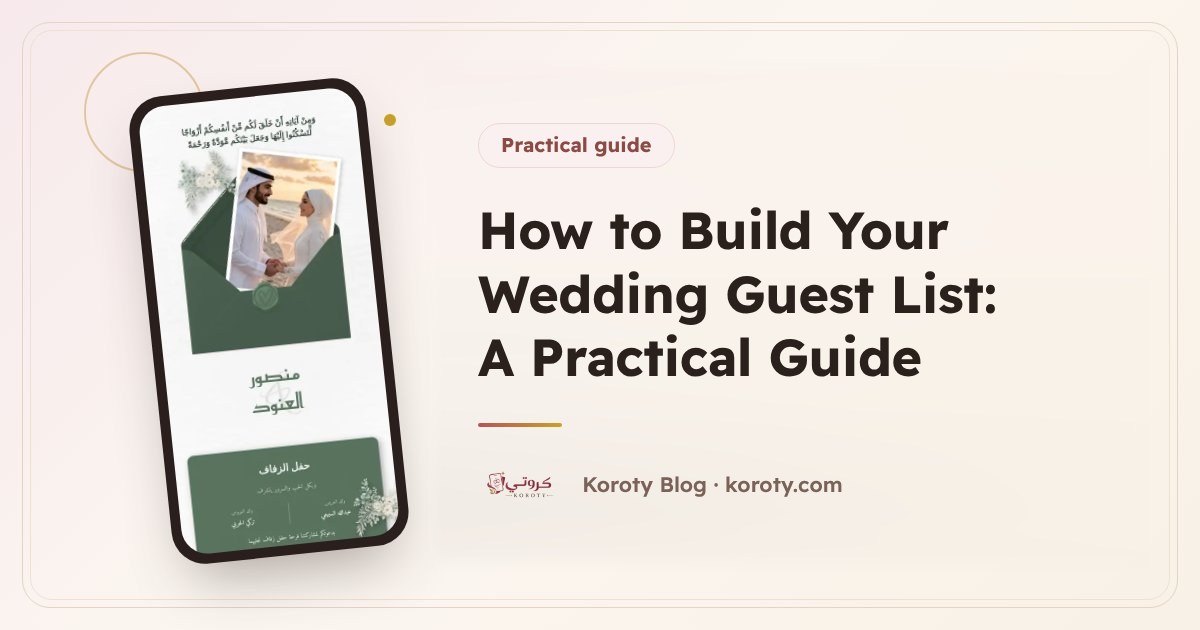
Digital invitations are a practical choice for many couples, because they make it easy to share the details with guests, who can return to the invitation at any time. The invitation can also carry an RSVP, which tells you how many people will actually attend.
You can choose a digital wedding invitation in a design that suits the style of your wedding and your personalities.
9. Follow up on RSVPs #
The guest list is not finished when the invitations go out. Divide guests into three statuses:
- Confirmed: the guest confirmed and said how many are coming.
- Declined: the guest can't attend.
- Awaiting reply: the guest hasn't answered yet.
Tracking these statuses tells you the expected attendance, which matters when you confirm the venue, food and tables. For more, see wedding RSVP: how to know your guest count.
10. Keep a reserve list #
If your list is longer than your target, keep a reserve list of people you would like to invite if seats become available.
Plan this in advance, and avoid sending invitations in waves so close together that guests get confused.
Common mistakes when building a guest list #
Inviting more people than the venue holds #
Always make sure the final number fits the venue's capacity.
Not deciding on plus-ones #
Leaving plus-ones open can increase the number of guests unexpectedly.
Relying on memory #
Memory alone leads to forgetting important people or repeating names.
Sending invitations before the list is final #
It is better to finish the main list before sending, to avoid repeated changes.
Not following up on RSVPs #
RSVPs tell you the expected number of guests and help you prepare properly.
Not updating the list #
Some guests' status changes after the invitation is sent, so keep the list up to date.
When should you start building your wedding guest list? #
Start early in the planning. Begin with a wide first list, then sort and review the names against the budget and the venue's capacity. After that, approve the final list, send the invitations and follow the RSVPs.
The earlier you start, the more time you have to decide calmly and avoid sudden changes close to the wedding.
The bottom line #
A guest list may look like a set of names, but it is one of the most important parts of organising a wedding. Set the right number, collect the names, sort guests by priority and agree with your partner on clear rules for plus-ones and children. Then use an organised list to track invitations and RSVPs.
With an elegant digital wedding invitation that is easy to share, inviting your guests becomes more organised, and you can enjoy preparing for your big day without complications. You can design yours for free on Koroty.
Frequently asked questions #
How many guests should we invite to our wedding? #
There is no single right number. Take the smaller of two figures: the seats your venue holds, and the number of guests your budget covers once catering is included. That is your ceiling, and every name added above it needs one removed.
How do we cut the guest list without offending anyone? #
Use general rules that apply to everyone rather than judging each name: relatives up to first cousins, friends you have seen in the past year, and either the whole team from work or nobody. A clear rule is easier to explain than leaving one person out.
When should we start the guest list? #
Before you book the venue, because the number decides its size and cost. Start with a rough list early and finalise the names a few weeks before sending, as in the wedding planning checklist.
Should we invite coworkers? #
If you invite some, invite the whole close team, or only colleagues who have become friends outside work. Inviting half a team hurts the other half more than inviting no one. More in inviting coworkers to your wedding.
How do we know the final number before the wedding? #
Ask for an RSVP with party size on each invitation, set a reply deadline before the venue needs your final count, and follow up with anyone who hasn't replied. See what RSVP means on a wedding invitation.