

Put the dress code on the invitation in one short line, such as "Black tie," "Cocktail attire" or "Garden party attire," and add a sentence if guests may be unsure. Use common terms, keep the line near the bottom, and explain anything unusual, like cultural dress or a beach setting. Below you will find what each term means and 18 samples to copy.
Dress codes are a courtesy to guests, not a test. A clear line saves people from guessing, from overspending, or from showing up in the wrong shoes at a garden wedding. For the rest of the invitation, see what to include on a wedding invitation.
What do the common dress codes mean? #
Terms vary a little between regions, so treat this table as a general guide.
| Dress code | What it usually means | Typical outfits |
|---|---|---|
| White tie | The most formal, rare today | Tailcoat, floor-length gown |
| Black tie | Formal evening | Tuxedo or dark formal suit; floor-length gown or elegant evening dress |
| Black tie optional | Formal, with some flexibility | Tuxedo or dark suit; long dress or formal cocktail dress |
| Formal | Dressy, similar to black tie optional | Dark suit and tie; long or elegant dress |
| Cocktail | Festive and polished, less formal than black tie | Suit, tie optional; knee-length or midi dress |
| Semi-formal | Dressy but relaxed | Suit or blazer; a dress or dressy separates |
| Festive | Dressy with color, texture or sparkle; often used for winter and holiday weddings | Jewel tones, velvet, metallics; a suit or a cocktail or midi dress |
| Dressy casual | Smart, comfortable | Collared shirt, trousers; a sundress or skirt |
| Garden party | Outdoors, light and floral | Light fabrics, block heels or flats, no long thin heels |
| Beach | Relaxed, warm weather | Lightweight fabrics, linen, sandals, comfortable shoes |
| Cultural attire | The wedding's tradition guides the outfit | Saree, lehenga, kurta, thobe, abaya, kaftan or other traditional wear |
If you don't mention the code, many guests will guess from the venue and the time of day. An evening wedding in a hotel ballroom usually suggests formal wear, while a daytime wedding in a park suggests lighter clothes. Saying it removes the guesswork.
Where should the dress code go on the invitation? #
On a paper card, the dress code usually goes in the lower right corner or under the venue. On a digital invitation, put it in the notes section, where it is easy to find. On Koroty, the notes section can hold the dress code along with other practical lines like parking, children and weather.
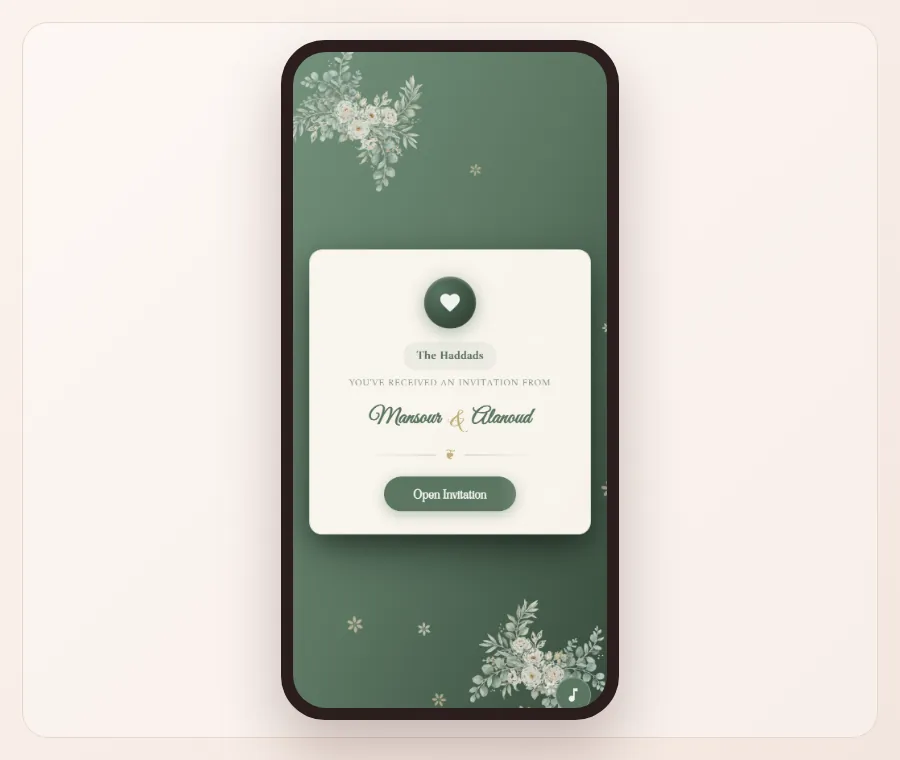
Shown here is Minimalism Sage Green, a calm minimal design. Designing is free, and the permanent link is one payment per invitation; see the pricing page. Design yours free and put your dress code in the notes.
What are some formal dress code wording samples? #
Black tie.
Black tie. Floor-length gowns and tuxedos are welcome.
Black tie optional. A tuxedo or dark suit is perfect.
Formal attire. Think long dresses and dark suits.
Formal evening attire. We are looking forward to dressing up with you.
What are some cocktail and semi-formal samples? #
Cocktail attire.
Cocktail attire. Suits and dresses that make you want to dance.
Semi-formal. A suit or a dressy outfit will fit right in.
Dressy casual. Comfortable but polished. The evening will be warm.
What are some outdoor and beach samples? #
Weather and ground matter. Mention shoes, because heels sink into grass and sand.
Garden party attire. Light fabrics and comfortable shoes are best, since the ceremony will be on the lawn.
Garden attire. Please skip thin heels. The path is gravel.
Beach formal. Think linen suits and flowing dresses, and bring shoes you can walk in on sand.
Beach casual. Sandals are welcome, and the sea breeze may be cool in the evening, so bring a light wrap.
What about cultural dress and color requests? #
Invite guests to wear traditional clothing, and make clear it's optional. If you want certain colors, say so kindly. If you want to avoid some, say which and why.
Traditional dress is warmly welcome. Sarees, kurtas, thobes, abayas, suits and dresses are all equally appreciated.
Dress in the colors of the season: soft pastels and jewel tones. We kindly ask guests to avoid white and ivory.
Please wear festive colors. Bright colors are encouraged and black is not required.
Modest dress is requested for the ceremony, with shoulders and knees covered. Feel free to change for the reception.
For mixed-tradition weddings, see multicultural wedding invitation wording. For Muslim weddings with gender-separated events, see men and women wedding invitation wording.
Why do many invitations ask guests not to wear white? #
Many traditions treat white as the bride's color, so guests are often asked to choose something else. It is a custom, not a rule everywhere. In some cultures, white is worn for mourning or other meanings, and in others the bride wears red or gold. If it matters to you, state it kindly.
Please save white and ivory for the bride.
How does the time of day change the dress code? #
Guests read the time and the venue as clues, so make sure the code and the schedule agree.
| Setting | What guests often assume | Tip |
|---|---|---|
| Evening, hotel or hall | Formal or cocktail | Name it, since "dressy" can mean many things |
| Afternoon, garden or park | Light, floral, comfortable | Mention shoes and shade |
| Daytime ceremony, evening party | One outfit for both | Say whether guests may change |
| Beach at sunset | Relaxed but neat | Mention sand, wind and a light layer |
| Multi-day events | A different code each day | List the code beside each event |
For a wedding with several events, give each its own line in the schedule.
Friday welcome dinner: smart casual. Saturday ceremony and reception: black tie optional. Sunday brunch: casual.
A good dress code line answers one question: what should I wear? If guests would still have to ask you, add a sentence.
What mistakes should you avoid? #
- Using a term guests don't know. "Creative black tie" or "festive formal" means different things to different people. Add one clarifying sentence.
- Skipping the weather. An outdoor wedding in summer or winter changes what people need.
- Forgetting accessibility. If the venue involves stairs, grass or a long walk, tell guests so they can choose shoes.
- Putting it only on the invitation. Mention it again in a reminder close to the date.
- Changing it later. If the dress code changes because of weather, update it and tell guests.
Frequently asked questions #
Do I have to include a dress code? #
No, but it helps, especially for formal, outdoor or cultural weddings.
What is the difference between formal and black tie? #
Black tie usually calls for tuxedos and floor-length gowns. Formal is slightly looser: a dark suit or an elegant long or cocktail dress is fine.
How do I write a dress code for an outdoor wedding? #
Name the setting, such as "garden party," and add a note about shoes and weather.
Can I ask guests to wear a certain color? #
Yes, if you ask kindly and explain it. Offer a range of colors rather than one.
Can guests wear black to a wedding? #
Often yes, especially for an evening or formal wedding, but some couples and families prefer brighter colors. If you would rather guests avoid black, say so kindly in the dress code line and suggest colors you would love to see.
Where do I put the dress code on a digital invitation? #
In the notes for guests, so it is easy to find. You can edit it later and press "Update" without changing the link.
The bottom line #
Use a clear, familiar term, add a line if the setting or tradition needs it, and keep the tone kind. Guests will arrive comfortable and well dressed. Design yours free, or read the digital wedding invitations guide.