
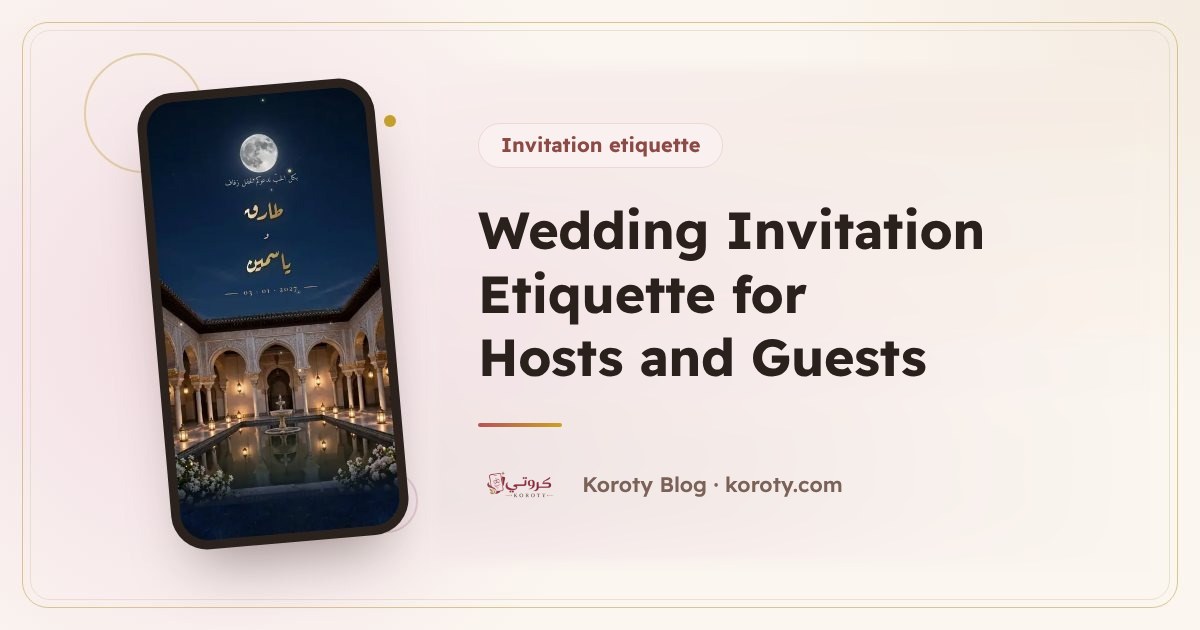
Wedding invitation etiquette rests on two simple principles: clear information from the hosts, and a prompt reply, yes or no, from the guest. Sending the invitation in each guest's name, with a map link to the venue and a clear RSVP deadline, spares the family embarrassment. A guest who replies within a few days gives the couple the chance to plan the venue and catering accurately, with neither waste nor shortage.
This practical guide covers the manners of sending an invitation on the hosts' side, and the rules of receiving one and replying graciously on the guest's side.
The etiquette of sending, for the couple and their families #
A successful invitation starts with how it is worded and sent. These are the rules that make your invitation welcome and appreciated by everyone.
1. Send the invitation at the right time #
Sending three to five weeks before the wedding is the ideal window in our communities. Send months ahead and people forget. Send a few days before and you upset their plans and make them feel like an afterthought. For the exact timing, see when to send wedding invitations.
2. Invite by name, not with a general message #
It is poor etiquette to drop the guest list into a shared WhatsApp group, or to send a generic picture of a card. The proper way is for the message to arrive addressed to each guest: "Mr Fahad", "Umm Mohammed", with the number of seats reserved for them. That detail tells the guest their place matters and that their presence is specifically wanted.
3. Make the date and venue details clear #
No guest wants to phone on the day to ask where the hall is or when the zaffa starts. Save them and yourself the trouble by adding the venue's location on a map that opens with one tap, and by stating when the reception begins and when dinner is served.
4. Be tactful with special notes #
If the hall asks that children are not brought, or that guests don't take photos on their phones, choose kind and respectful wording. Avoid harsh lines such as "Children strictly forbidden" and use warm alternatives like those in adults-only wedding invitation wording.
A guest's etiquette on receiving a wedding invitation #
When a wedding invitation reaches you, you have a social responsibility towards the person who valued your company and asked you to share their joy. Here is how to be a gracious guest.
1. Reply quickly, within two or three days #
The greatest help you can give the groom or the bride's family is to confirm or decline as soon as you know your schedule. Don't wait until the last day, and don't leave your reply for the morning before the wedding. Every seat in the hall is tied to a meal and a cost, and an early decline is far more gracious than silence or simply not turning up.
2. Keep to the number of seats given #
If your invitation says "two people", that means two seats. Bringing extra people without arranging it first puts the hosts and the reception team in a very awkward position with the venue.
3. Decline politely and sincerely #
If circumstances prevent you from attending, don't just ignore the invitation. Tap "I can't make it" in the digital invitation, and write the couple a short message of congratulations and a kind apology. The samples in how to decline a wedding invitation politely will help you word it.
How do you handle guests who are slow to RSVP? #
In families' experience of organising weddings, some guests are slow to reply out of forgetfulness or reluctance to decline. Here is the calmest way to handle it:
- Send a gentle reminder a week before you must confirm with the venue: a short, friendly message with the date and the invitation link, with no reproach.
- Use the reminder button: in the Koroty dashboard, one press sends a reminder to those who opened the invitation but haven't confirmed yet.
- Phone the elders: some older relatives aren't comfortable with links on a phone, and good manners call for ringing them to ask kindly whether they will honour you with their presence.
Ready-made reminder and RSVP messages #
A gentle reminder to send guests before the list closes:
Good evening, my dear. A reminder that our wedding is next Thursday. We would be delighted if you could confirm your attendance through the link, so we can arrange your seats in the hall. It would mean a lot to have you there: (invitation link)
A reminder for close friends:
Hello my friend, the day is nearly here! Please confirm through your invitation link so we can arrange the friends' tables together: (invitation link)
Frequently asked questions #
When is it too late to RSVP to a wedding? #
Aim to reply at least two weeks before the wedding. After that, venues and caterers begin settling final bills and table plans, and a late reply can disrupt the arrangements.
What do I do if I declined, then my circumstances changed and I can go? #
Don't just turn up at the hall. Contact the groom or whoever invited you directly, explain kindly that things have changed, and ask whether a seat can be added. If they welcome it, wonderful. If it can't be done, be understanding.
Is it acceptable to share a personal invitation link with someone else? #
No. A digital invitation with a personal link is addressed to its owner by name, and passing the link to someone else may record their reply under your name or cause a clash in the guest list.
How do I decline a wedding invitation without causing offence? #
Send a clear, respectful apology within two days of receiving the invitation, wish the couple a happy life, and make a point of calling them or sending a small gift afterwards to show how much they mean to you.
Who exactly is invited? #
Plus-ones are where etiquette gets personal. For a fair rule and wording you can copy, see plus-one wedding invitation wording and etiquette.
The bottom line #
Wedding invitation etiquette isn't complicated or stiffly formal. It is simply appreciation for the couple's efforts on their night, and care from the hosts for their guests' comfort. Start applying these principles at your own wedding, and explore Koroty's designs to send invitations worthy of you and your guests.